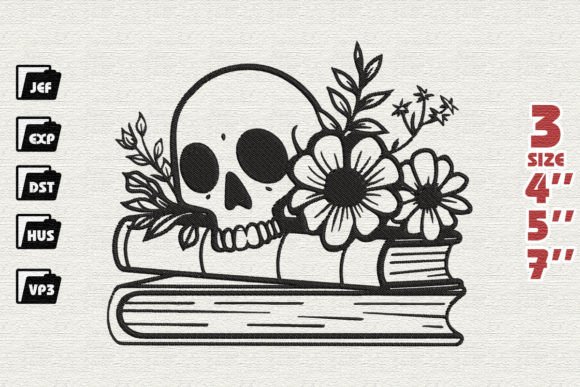
Skull Book Flower: A Unique Embroidery Design for Creative Workflows
In the realm of textile customization and small-scale manufacturing, the selection of a design motif is rarely just an aesthetic choice; it is a strategic decision that influences branding, production efficiency, and market appeal. The Skull Book Flower embroidery design represents a compelling intersection of edgy symbolism and whimsical detail. This specific motif combines the structural rigidity of a book with the organic chaos of flowers and the iconic imagery of a skull. For professionals ranging from freelance designers to boutique business owners, integrating this design into their product line requires a clear understanding of its technical specifications, workflow integration, and potential applications across various fabric types.
Understanding the Design Architecture
The Skull Book Flower is not merely a static image but a complex arrangement of stitch paths designed to create depth and texture on fabric. When analyzing this design within a broader creative process, it serves as a focal point that can elevate standard items into unique conversation starters. The composition typically features a central book element, often stylized with open pages or a spine, flanked by blooming floral elements that soften the starkness of the accompanying skull. This balance between dark and light themes makes it versatile for diverse audiences, appealing to those who appreciate gothic aesthetics without sacrificing charm.
From a technical standpoint, the design is engineered to work seamlessly with modern computerized embroidery machines. It comes packaged in multiple file formats, ensuring compatibility with major industry software and hardware platforms. This multi-format availability is crucial for streamlining the pre-production phase. Whether you are using a Bernina, Brother, Janome, or Tajima machine, having access to the correct digitized file reduces the time spent on conversion and troubleshooting. The digitization quality directly impacts the final output, influencing factors such as stitch density, pull compensation, and underlay stability.
Integrating the Design into Production Workflows
For entrepreneurs and hobbyists alike, the successful implementation of the Skull Book Flower depends on how well it fits into existing operational workflows. The process begins long before the needle touches the fabric. In the planning stage, creators must consider the target demographic and the intended use case. Is this design for a high-end home decor collection, a casual apparel line, or custom gifts? Understanding the end goal dictates the choice of materials and the finishing techniques required.
Once the concept is defined, the preparation phase involves selecting the appropriate base material. The design's intricate details require a stable surface to prevent distortion during stitching. T-shirts made from heavy cotton blends offer a sturdy canvas, while towels provide a textured background that enhances the floral elements. For home decor items like pillowcases or table runners, the design can be scaled up to serve as a centerpiece. During this selection process, it is essential to test the design on scrap fabric first. This step allows for adjustments in hoop tension and thread color placement, ensuring that the final product meets quality standards before mass production begins.
Pre-Production Considerations
- File Compatibility: Verify that your embroidery machine supports the provided file formats (e.g., .PES, .DST, .JEF). If necessary, use reliable conversion software to ensure data integrity.
- Fabric Selection: Choose materials that match the weight and complexity of the design. Stretchy fabrics may require stabilizers to maintain shape.
- Stabilizer Choice: Use tear-away or cut-away stabilizers depending on the fabric type to support the dense stitching areas around the skull and book.
Execution and Quality Control
During the actual stitching process, the Skull Book Flower demands attention to detail. The interplay between the sharp lines of the book and the soft curves of the flowers requires precise thread tension. If the tension is too loose, the floral petals may lose definition; if too tight, the fabric may pucker, distorting the overall image. Operators should monitor the machine closely, especially during the transition between different stitch types. Regular maintenance of the needle and bobbin area is also critical to prevent skipped stitches or thread breaks, which can compromise the visual integrity of the design.
Quality control is an integral part of the execution phase. After each item is embroidered, it should be inspected for consistency. Check for any loose threads, misaligned patterns, or uneven color saturation. For businesses producing batches of products, establishing a checklist for these inspections ensures that every piece leaving the facility maintains the brand's reputation for quality. Consistency in the application of the Skull Book Flower builds trust with customers, encouraging repeat purchases and positive word-of-mouth referrals.
Post-Production Finishing
- Trimming Excess Thread: Carefully remove any loose ends from the back of the fabric to ensure a clean finish.
- Removing Stabilizer: Gently tear away excess stabilizer material, being careful not to pull on the stitched design.
- Pressing: Use a pressing cloth to iron the embroidered area from the back, avoiding direct contact with the stitches to prevent flattening the 3D effect.
Strategic Applications Across Industries
The versatility of the Skull Book Flower extends beyond simple decoration. In the fashion industry, it can be used to create limited-edition t-shirts that appeal to niche markets, such as literary enthusiasts with a penchant for alternative styles. Placing the design on the chest pocket or across the back of a garment creates a bold statement piece. Similarly, in the home decor sector, the motif adds a touch of personality to everyday items like kitchen towels, throw pillows, and wall hangings. Its whimsical nature makes it suitable for eclectic interiors where traditional patterns might feel too rigid.
For small business owners, this design offers an opportunity to diversify product offerings without significant investment in new equipment. By leveraging the multi-format files included with the design, businesses can quickly adapt to different machine setups or outsource production to third-party embroiderers. This flexibility is particularly valuable for startups looking to test market response before committing to large inventory orders. Additionally, the design's unique character can serve as a signature element for branded merchandise, helping companies stand out in crowded marketplaces.
Long-Term Value and Adaptability
Investing in high-quality embroidery designs like the Skull Book Flower provides long-term value through reusability and adaptability. Unlike printed graphics that may fade or crack over time, embroidered designs retain their vibrancy and texture even after repeated washing. This durability makes them ideal for products that undergo frequent use, such as uniforms, aprons, or children's clothing. Furthermore, the design can be easily modified to suit seasonal trends or special events. For instance, changing the thread colors to match holiday palettes can refresh the look without requiring a new digitized file.
As technology advances, the ability to integrate digital assets into physical products becomes increasingly important. The Skull Book Flower exemplifies this trend by bridging the gap between digital creativity and tangible craftsmanship. Its structured yet artistic approach encourages creators to think critically about how their designs interact with materials and machinery. By focusing on practical implementation and continuous improvement, users can maximize the potential of this design to enhance their portfolios and drive business growth.
Conclusion on Workflow Integration
Ultimately, the success of incorporating the Skull Book Flower into any project hinges on thoughtful planning and precise execution. From the initial selection of file formats to the final inspection of finished goods, each step plays a vital role in achieving optimal results. Whether you are a seasoned professional managing a production line or a hobbyist exploring new creative avenues, this design offers a rich opportunity to add charm and character to your work. By understanding its technical requirements and strategic applications, you can seamlessly integrate it into your workflow, creating products that resonate with audiences and stand the test of time.