Teacher Mode All Day Every Day: A Creative Workflow for Embroidery and Branding
The phrase Teacher Mode All Day Every Day has evolved from a simple classroom sentiment into a versatile cultural touchstone. For educators, it represents a commitment to the craft of teaching. However, for makers, small business owners, and creative entrepreneurs, this phrase serves as a powerful thematic anchor for product design, brand identity, and community building. When paired with high-quality machine embroidery designs, this concept transforms into a tangible asset that can elevate t-shirts, towels, home decor, and custom gifts. Integrating this specific motif into your production workflow requires more than just downloading a file; it demands a strategic approach to preparation, execution, and long-term application.
Defining the Role of the Design in Your Creative Process
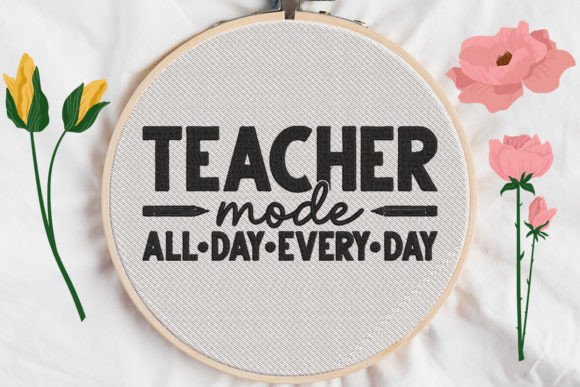
In the context of digital manufacturing and textile arts, Teacher Mode All Day Every Day is not merely text; it is a structured element within a broader design ecosystem. Before any needle touches fabric, the design must be evaluated against the intended use case. Is this item a personal keepsake for a retiring colleague? A bulk order for a school fundraiser? Or a niche product for an Etsy shop targeting the education sector? Understanding the end-user dictates the scale, thread color palette, and fabric selection.
This design fits seamlessly into the "planning" phase of a project. It acts as the visual hook that communicates a shared experience or professional pride. When you decide to incorporate this embroidery pattern, you are making a decision about the narrative of the product. The whimsical nature of the design allows it to bridge the gap between professional utility and personal expression, making it suitable for both functional items like towels and decorative pieces like throw pillows.
Preparation and File Compatibility
Successful implementation begins with technical readiness. One of the primary advantages of modern machine embroidery assets is their versatility across different hardware. The Teacher Mode All Day Every Day design typically comes packaged with multiple file formats, such as .PES, .DST, .JEF, and .EXP. This multi-format availability is crucial for workflow efficiency, ensuring that whether you are using a Brother, Janome, Bernina, or Pfaff machine, the design remains accessible without costly conversion software.
Before loading the file, consider the following preparation steps:
- Format Verification: Confirm which file extension matches your specific embroidery machine model. Using the wrong format can lead to registration errors or machine crashes.
- Hoop Selection: Determine the physical dimensions of the design. A larger hoop may be necessary if the text includes decorative flourishes or if you plan to add a border. Ensure the hoop size accommodates the design without crowding the stitching area.
- Fabric Stabilization: Different substrates require different stabilization strategies. T-shirts often need cut-away stabilizers for durability, while towels may require tear-away options to maintain texture. Home decor fabrics might need a combination of both depending on the weave density.
Integrating Into Production Workflows
Once the technical setup is complete, the design moves into the execution phase. For small business owners, this is where batch processing becomes essential. If you are producing a line of teacher appreciation gifts, organizing your workspace for efficiency is key. Set up a dedicated station with pre-cut stabilizers, sorted threads, and the loaded design files ready to go.
The process involves hooping the fabric securely to prevent shifting during the high-speed stitching of the text. Because the phrase Teacher Mode All Day Every Day contains distinct letterforms, precise alignment is critical. Run a test stitch on a scrap piece of similar fabric first. This "test run" allows you to check for tension issues, thread breaks, or density problems that could ruin the final product. Adjustments made at this stage save significant time and material costs later.
Strategic Applications Across Product Categories
The versatility of this embroidery design lies in its adaptability across various product categories. Each category presents unique opportunities and challenges regarding placement and aesthetic impact.
Apparel and Wearables
T-shirts and hoodies are the most common canvases for this design. When applying Teacher Mode All Day Every Day to apparel, consider the placement carefully. A left chest pocket placement offers a subtle nod to the profession, while a large back print makes a bold statement. For hoodies, the design works well centered on the upper back or across the shoulders. The durable nature of machine embroidery ensures that the message survives repeated washes, maintaining quality over the long term.
Home Decor and Lifestyle Items
Extending beyond clothing, this design adds a layer of charm to home environments. Towels, particularly hand towels or bathrobes, benefit from the textured look of embroidery. The raised stitches catch the light differently than printed ink, adding a tactile dimension to the item. Similarly, pillowcases, table runners, and tote bags serve as excellent carriers for this whimsical accent. In these applications, the design functions as a conversation starter, reinforcing the owner's identity or celebrating a loved one's career.
Corporate and Event Merchandise
For schools, educational nonprofits, and corporate training departments, this design offers a cohesive branding opportunity. It can be used to create uniform gear for staff, fostering a sense of team unity. During back-to-school events or retirement parties, items featuring this embroidery serve as memorable tokens of appreciation. The ability to produce these items in-house or through a local embroidery service streamlines the procurement process and reduces lead times compared to traditional screen printing.
Quality Control and Long-Term Usability
Maintaining consistency is vital for anyone treating embroidery as part of a professional workflow. Quality control involves inspecting every finished piece for loose threads, skipped stitches, or puckering. Puckering, in particular, can occur if the stabilizer was insufficient or if the fabric was stretched too tightly in the hoop. Addressing these issues immediately prevents defective products from reaching customers.
Long-term usability also depends on care instructions. Educate your end-users on how to care for embroidered items. Turning garments inside out before washing helps protect the stitches from abrasion. Avoiding high-heat drying preserves the elasticity of the fabric and the integrity of the thread. By providing clear care guidelines, you enhance the perceived value of the product and ensure the Teacher Mode All Day Every Day message remains vibrant for years.
Optimizing the Creative Ecosystem
To fully leverage this design, integrate it into a broader creative strategy. Pair the embroidery with complementary colors that resonate with the education theme—think chalkboard black, pastel yellows, or classic navy blue. Consider offering customization options, such as adding a recipient's name below the main phrase, which adds a personal touch that increases the item's emotional value.
Furthermore, document your process. Keep records of which stabilizers worked best for specific fabrics, which thread brands provided the smoothest finish, and which file formats loaded most reliably. This knowledge base becomes an invaluable resource for future projects, allowing you to replicate success and troubleshoot issues quickly. Whether you are a hobbyist exploring new techniques or a business owner scaling production, the systematic approach to using the Teacher Mode All Day Every Day embroidery design ensures consistent, high-quality outcomes.
Ultimately, this design is more than just a pattern; it is a tool for connection and expression. By understanding its technical requirements and strategic applications, you can transform simple fabric into meaningful artifacts that celebrate the dedication of educators everywhere. From the initial file download to the final trim of the excess thread, every step in the process contributes to a product that is both functional and deeply resonant.